DIY Ultrasonic Cleaners vs. Degritter/HumminGuru: Are the Premium Models Worth It?
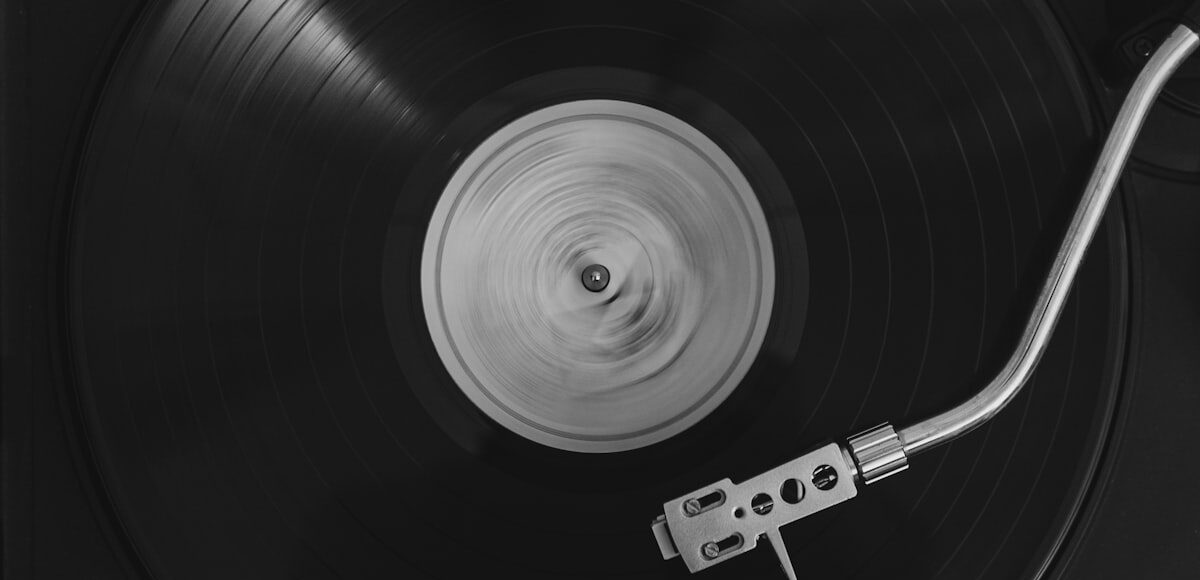
If you are serious about vinyl, you already know that a clean record is the foundational element of analog playback. The stylus is essentially a microscopic seismograph; it will trace the canyon walls of a...
If you are serious about vinyl, you already know that a clean record is the foundational element of analog playback. The stylus is essentially a microscopic seismograph; it will trace the canyon walls of a record groove with indiscriminate precision, reproducing both the delicate transients of a ride cymbal and the jagged, percussive impact of embedded dust. In the pursuit of an absolutely silent background, traditional velvet brushes and vacuum wands eventually hit their physical limits. Enter cavitation—the principle behind ultrasonic cleaning.
The current landscape of ultrasonic record cleaning is sharply divided into two camps. On one side, we have the DIY approach, often built around a generic industrial ultrasonic tank like those from Vevor, augmented with an aftermarket rotisserie motor and a 3D-printed spindle. On the other side are the purpose-built, premium turnkey solutions: namely, the Degritter (and Degritter Mark II) and the HumminGuru.
The question I hear constantly at UltrasonicRecordCleaners.com is this: Is it actually worth dropping four figures on a Degritter, or several hundred on a HumminGuru, when you can cobble together a high-powered Vevor setup for a fraction of the cost? Let’s dismantle both approaches to see where the real value lies.

The Physics of Cavitation: A Level Playing Field?
All ultrasonic cleaners work on the same fundamental principle: transducers attached to the bottom or sides of a tank emit high-frequency sound waves into a bath of distilled water and surfactant. This creates microscopic cavitation bubbles that implode upon contact with the record surface, releasing tiny jets of energy that blast away contaminants at a microscopic level.
Whether you are using a $150 Vevor tank or a $3,200 Degritter, the physics of cavitation do not change. What does change is the frequency (measured in kHz), the power distribution, the fluid management, and the user experience.
The DIY Route: Vevor Tanks and Rotisserie Spits

The traditional DIY approach involves purchasing a 6-liter stainless steel ultrasonic cleaner—usually a Vevor [Insert Amazon Affiliate Link: Vevor 6L Ultrasonic Cleaner]—and pairing it with a motorized spindle system like the Vinyl Stack or a cheaper generic alternative [Insert Amazon Affiliate Link: Record Cleaning Motor Bracket].
The Pros of DIY
- Raw Power: Industrial tanks hit hard. They usually run at 40kHz with multiple large transducers. If you have crates of filthy, garage-sale finds with decades of embedded grime and mold, a 40kHz Vevor tank will blast them clean with brute force.
- Batch Processing: A 6L tank setup typically allows you to clean 3 to 6 records simultaneously. For high-volume collectors or dealers, batch cleaning is a massive time-saver.
- Cost-Effectiveness: You can build a highly capable 4-record setup for under $250.
The Cons of DIY
- Frequency Limitations: Most cheap industrial tanks operate exclusively at 40kHz. While effective for heavy soil, 40kHz creates relatively large cavitation bubbles. It can be overly aggressive on the vinyl if left too long, and it doesn’t penetrate the narrowest high-frequency groove modulations as effectively as higher frequencies.
- Fluid Management and Filtering: This is the Achilles’ heel of the DIY setup. You are washing records in a stagnant bath. As you clean, the water becomes contaminated. Without an active filtration system, you risk redepositing microscopic debris back onto the records as they exit the bath. Adding an external pump and micron filter to a Vevor tank turns a simple setup into a sprawling, leaky science fair project.
- Drying: You must manually remove the records, place them on a rack, and either let them air dry (which risks water spots and dust accumulation) or blow them dry with a fan or a vacuum system.
- Noise: Industrial tanks are loud. They emit a grating, metallic screech that requires you to leave the room.
The Premium Path: Degritter and HumminGuru
Turnkey solutions have revolutionized the space by taking the industrial science out of ultrasonic cleaning and turning it into an appliance-like experience.
HumminGuru: The Accessible All-in-One
The HumminGuru [Insert Amazon Affiliate Link: HumminGuru Ultrasonic Vinyl Record Cleaner] arrived via Kickstarter and completely disrupted the market by offering an all-in-one wash and dry cycle for under $500. It operates at 40kHz, uses a proprietary water tank system (requiring only 400ml of fluid), and has a built-in fan for drying.
- The Verdict: The HumminGuru is excellent for maintaining an already decent collection. It is highly compact and visually appealing. However, its 40kHz transducers are relatively low-powered compared to a Vevor. It requires multiple cycles for truly filthy records, and the drying fans can be somewhat loud, though the washing cycle is quiet.
Degritter: The Benchmark of High-End Cleaning
The Degritter Mark II is widely considered the gold standard of consumer ultrasonic cleaning. It is priced accordingly.
- 120kHz Frequency: The Degritter operates at 120kHz. This produces significantly smaller, more tightly packed cavitation bubbles than 40kHz machines. These micro-bubbles penetrate the deepest, narrowest recesses of the groove. It is gentler on the vinyl while extracting the finest particulate matter.
- Active Fluid Filtration: The Degritter continuously pumps water through an easily replaceable cylindrical filter during the wash cycle. You are never washing a record in dirty water.
- Automated Drying: After the wash, it drains the tank and uses a sophisticated, filtered forced-air system to dry the record perfectly in minutes.
Head-to-Head Comparison
To clarify the practical differences, let’s look at the hard data across the three primary approaches.
| Feature | DIY Vevor Setup | HumminGuru | Degritter Mark II |
|---|---|---|---|
| Frequency | Typically 40kHz | 40kHz | 120kHz |
| Capacity | 3 to 6 records (Batch) | 1 record | 1 record |
| Active Filtration | No (Requires custom mod) | Yes (Water filter only) | Yes (Active loop filter) |
| Drying System | Manual / Air Dry | Built-in Fan (Unfiltered) | Built-in Blower (Replaceable Filter) |
| Noise Level | High (Industrial Screech) | Moderate | Low (Very quiet wash) |
| Fluid Required | ~6 Liters | 400 ml | 1.4 Liters |
| Approximate Cost | $200 – $350 | $400 – $500 | $3,200+ |
Are the Premium Models Worth It?
The answer depends entirely on the size of your collection, the value of your records, and your tolerance for workflow friction.
If you are a record dealer processing hundreds of dusty dollar-bin finds a month, a DIY Vevor setup is still the most efficient tool for the job due to its batch processing capability and raw 40kHz power. You simply cannot process enough volume with a single-slot machine to make it viable for commercial turnaround.
However, if you are an audiophile with a curated collection of high-value pressings, first editions, or expensive modern reissues, the DIY route introduces too many variables. The lack of active filtration and automated drying means you are essentially relying on air drying in a room full of dust, defeating the purpose of the wash.
The HumminGuru is the undeniable sweet spot for the average collector. It eliminates the mess of the DIY route and provides a complete wash/dry cycle for the price of a decent moving magnet cartridge.
The Degritter, however, exists in a class of its own. The 120kHz frequency provides a demonstrably blacker background than 40kHz machines, effectively eliminating the high-frequency “hash” that plagues lesser cleaning methods. The active filtration system guarantees that the suspended dirt is removed from the equation entirely. If your analog front end (turntable, tonearm, cartridge, and phono stage) represents a multi-thousand-dollar investment, bottlenecking that system with sub-optimally cleaned records makes no sense. In that context, the Degritter isn’t a luxury accessory; it is a fundamental component of the playback chain.
 ✓
✓